Research
Our research program applies protein engineering technologies to develop physiological molecular targeting agents for molecular diagnostics and targeted therapy, with a focus on oncology and infectious disease. Our program benefits from fundamental study on protein evolution and protein biophysics via high-throughput experimental techniques coupled with rational and bioinformatics guided protein design. These studies advance our understanding of protein sequence-function relationships and empower protein engineering technologies. We apply these biomolecular engineering perspectives and tools to develop diagnostics and therapeutics to detect, characterize, and treat cancer and infectious disease.
Our research is highly interdisciplinary including scientists, engineers, and collaborators across the Chemical Engineering and Materials Science, Biomedical Engineering, Pharmacology, Chemistry, Oncology, Physiology, Medicinal Chemistry, and Radiology as well as the biotechnology industry.
We appreciate the support of the National Institutes of Health, the American Cancer Society, the University of Minnesota, and biotechnology partners.
Protein Engineering
We engineer proteins with novel functions using, predominantly, yeast surface display and directed evolution. The relationships amongst protein sequence and function are studied to identify functional scaffolds for de novo discovery and design combinatorial libraries that more efficiently search the enormity of protein sequence space. We develop technologies for enhanced selection of multiple phenotypes (binding, antimicrobial activity, catalysis) and diversification of lead molecules to enable more effective evolution.
Combinatorial Library Design


Diagnostics and Therapeutics


Selection Technologies


Multifunctional Proteins

Positron Emission Tomography

Ultrasound and Photoacoustics


Ligand Design for Delivery

Synthetic Biomarkers

Diagnostics: Molecular Imaging and Diagnostic Delivery
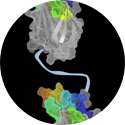
We develop technologies for the non-invasive identification, localization, and quantification of molecules or molecular processes in living systems via molecular imaging and synthetic biomarkers. For imaging, engineered proteins are conjugated with detectable labels for various imaging modalities including positron emission tomography, ultrasound, and photoacoustics. We systematically quantify the impacts of various molecular and physiologic parameters on diagnostic delivery. These studies improve the understanding of biological transport and facilitate the engineering of improved agents. For synthetic biomarkers, we are pursuing a protein engineering strategy to develop a non-invasive urinary diagnostic tool.
Antimicrobial Protein Engineering
We apply protein engineering insights and technologies to discover and evolve antimicrobial peptides and proteins with enhanced selectivity and potency for pathogenic infectious organisms. Antibiotic-resistant infections are a growing challenge resulting from the prevalence of broad-spectrum antibiotics and the lack of pharmaceutical development of new therapies. Antimicrobial proteins, evolved for enhanced selectivity to avoid impacting beneficial microorganisms, are a compelling potential solution. We develop discovery and evolutionary strategies to advance such a solution.
Fitness Landscapes

High Throughput Analysis

Discovery via Bioinformatics

Membrane Interaction

Localization

Engineering Copolymers for Cell Membrane Interaction
We study the interaction of block copolymer "poloxamers" with cell membranes to elucidate the impact of copolymer composition on cellular response towards the development of therapeutic molecules. We use a suite of biophysical techniques - from model membranes to cells to tissues - to evaluate how polymer attributes - hydrophobicity, architecture, chemical functionality, and size - affect localization, dynamics, and function.
Collaborators
Deepali Sachdev
Oncology

Mark Distefano
Chemistry

Tim Lodge

Rick Wagner
Medicinal Chemistry

Manish Patel
Oncology

Samira Azarin

Joseph Metzger

Doug Yee
Pharmacology

Frank Bates
Chem. Engr. & Mat. Sci

Jeremy Dahl

David Wood

Will Pomerantz
Chemistry

Jonathan Sachs

Katheryne Wilson

Support
